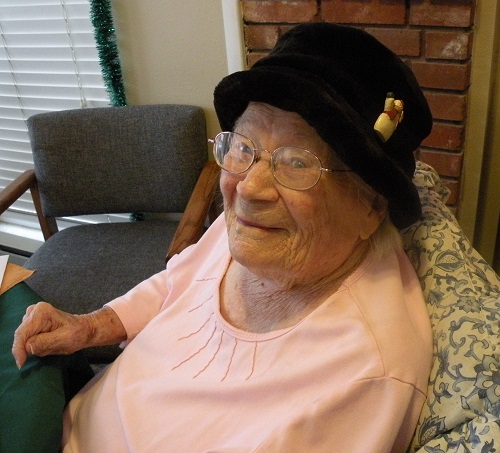
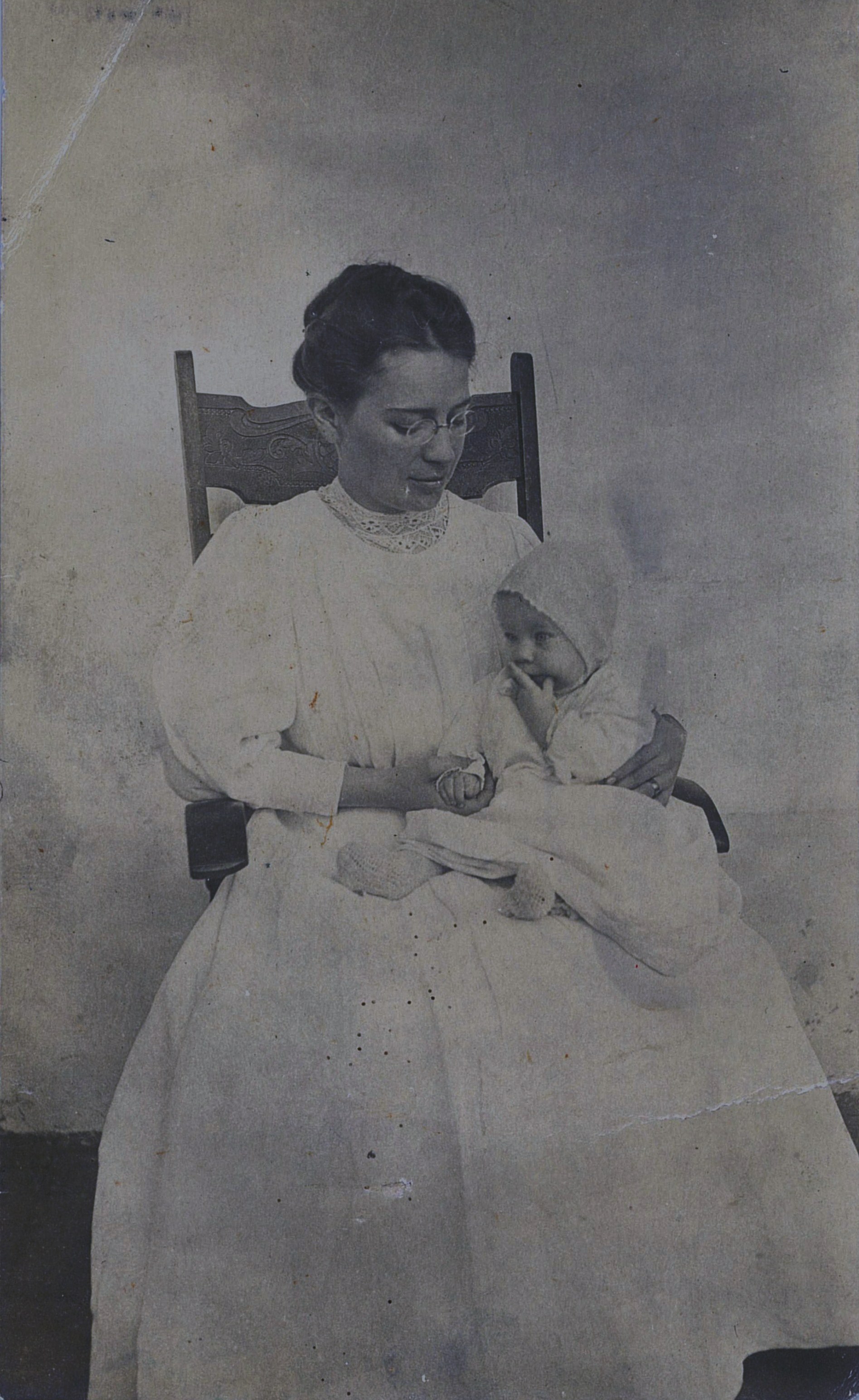
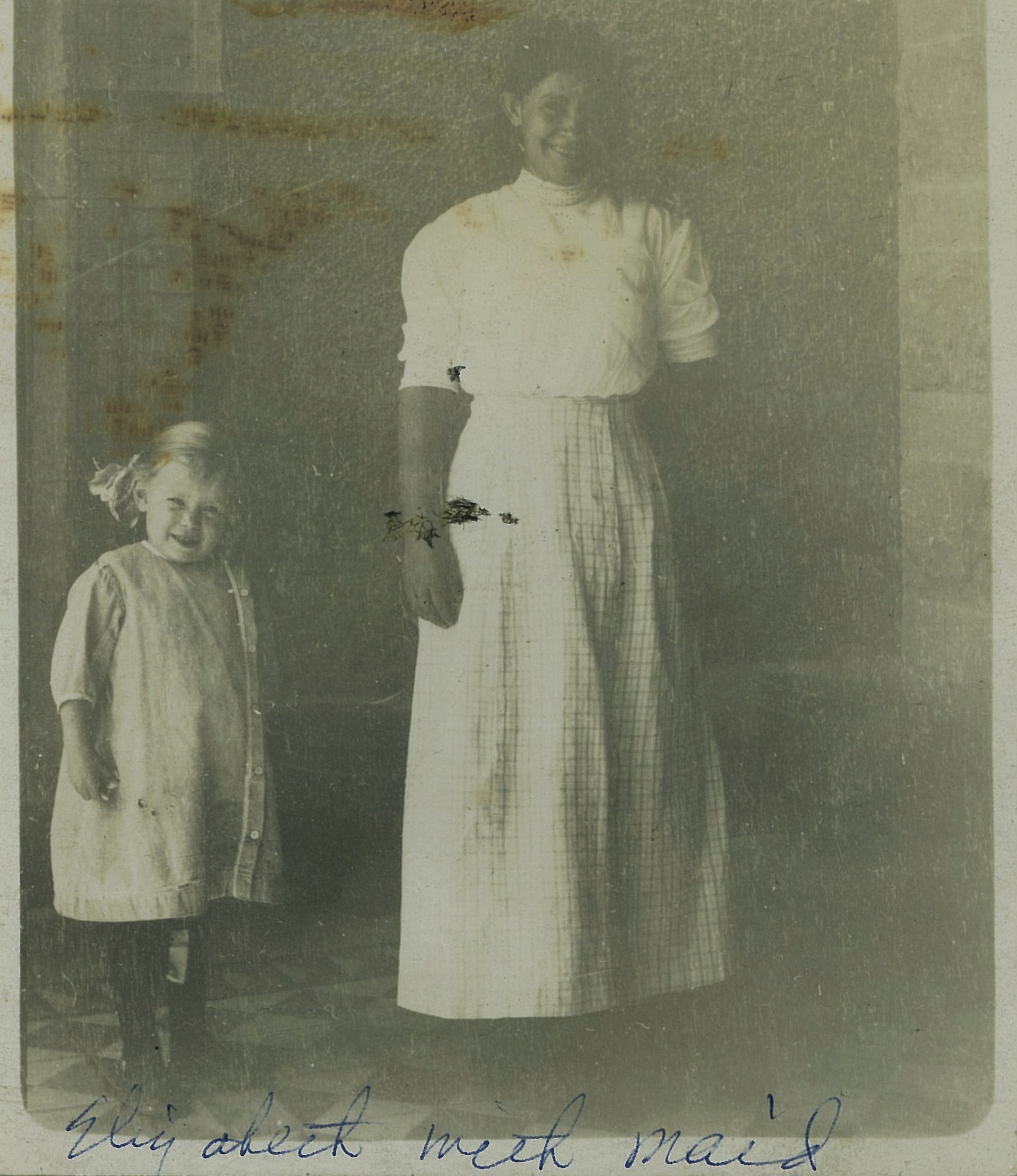
I was lucky enough to be a part of my Grandmother Elizabeth Carsey's last 40 years. We played countless card games, read books, played dress-up and many other games at her house. My family spent almost every holiday with her and Grandpa (until his death in 1985.) She was loved by the entire neighborhood and was often referred to as the Neighborhood Grandma. I held a special pride in the fact that I could call her mine!
Through her simplicity, she taught me the basics of life and the things which make you happy. Love your family, your church and music. The only thing worth crying over is beautiful music. And above all else, approach life with a sense of humor. I have done my best to live up to her expectations and pass those lessons onto my children.
View all posts by Shanna Vicker →
No Post today – But I encourage you to take a look at the other pages on the site. I recently added several pictures dating back to 1909 when Elizabeth was born to 2008 when she was 99 years old. You’ll find these on the Gallery Page. I am always surprised to see the older photos, just think how few were taken back then. Plus, you only got one chance to smile perfectly – no retakes!
Also, if you have a bit more time, click on the Escape from Mexico page. You will be on the edge of your seat – I promise. Here are a few lines from the Article written by Elizabeth’s father and printed on March 22, 1914 in the Atlanta Constitution.
All day Sunday the train bearing the American flag was forced to stand on the south line and wait the pleasure of the trains ahead.
Still to come: She goes to the fair – but not alone!
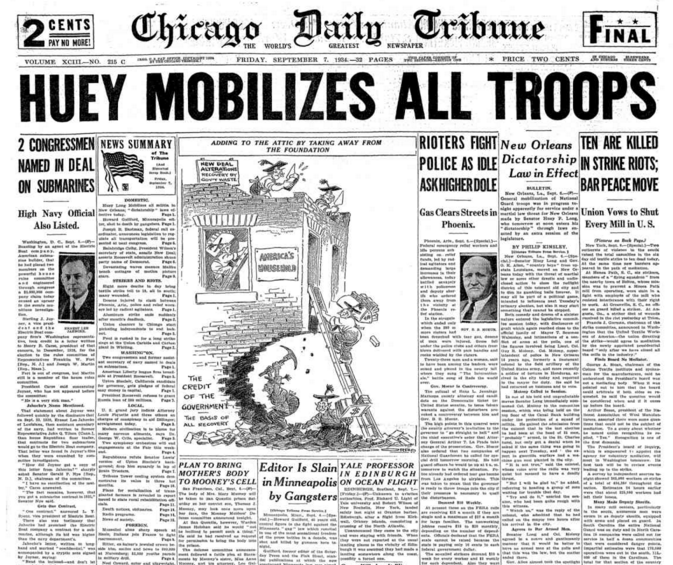
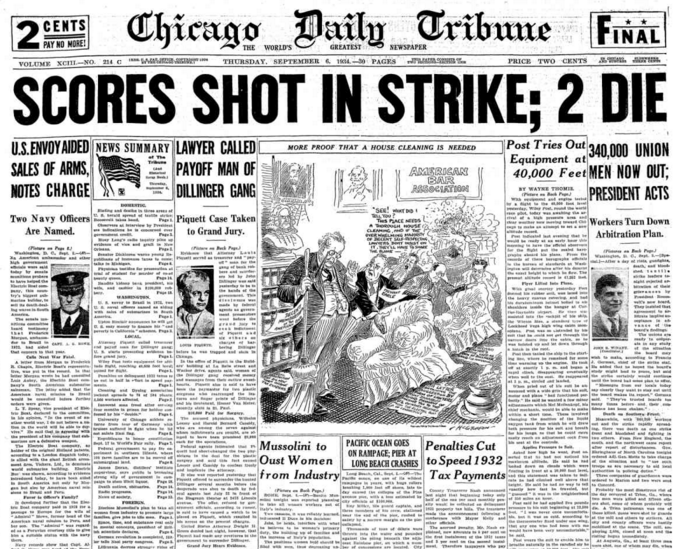
Here’s what else was happening 80-years-ago today.
No post – but look how cute she was at age 99! We know she is not quite herself this week – possibly overwhelmed with the new school year and duties. She has also spent some time reminiscing about her time in Mexico this summer. You can go back and read all the amazing adventures while she takes a few days to re-coup by clicking here.
Still to come – we find out what she calls herself a “Dumb Bunny!”
Here’s what else was happening 80-years-ago today.
Banquet for Bishop Boaz – He preached later. I played the organ. I am teaching in Roswell and playing the organ regularly – ought to be perfectly happy – But I am not, though I can’t explain the rest.
Here is what else was happening 80-years-ago today.
Got two letters from home and ones from Jonathon and Dit. Reread this diary. Wouldn’t give a farm – nor a whole estate for it! Mrs. Henderson asked me to take the organ. I played for choir practice.
Here is what else was happening 80-years-ago today.
No Post today. Tomorrow she receives letters – check back to see who they are from. Also check out the Escape from Mexico page. I added all the photo’s I could find from this time – and I finished the transcription. The follow up from yesterday is below. Click here to see it all!
Here is a look at what else was happening 80-years-ago today.
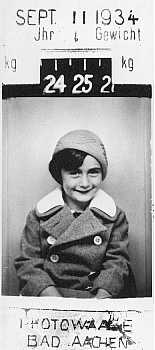
Ann Frank is 5
Cuban officials revealed the confiscation of five mail packages containing bombs addressed to American ambassador Jefferson Caffery.
More from the article Escape from Mexico written by J.P. Lancaster and published in the Atlanta Journal Constitution
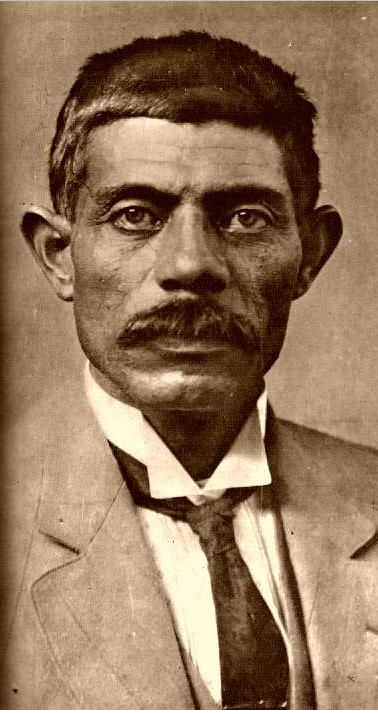
General Benjamin Argumedo
Found on revolucionentorreon.galeon.com
Bridges Burned
When we reached San Pedro we learned that a train had been sent by the Mexican government over the line to see what condition the road was in. This train returned Friday morning and reported that they found two burned bridges and a washout.
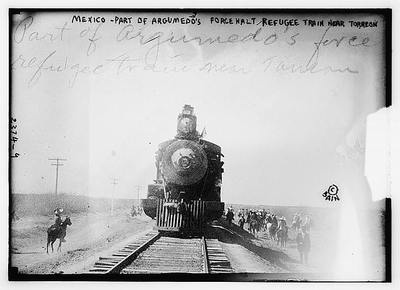
Saturday morning a construction train came from Torres with instructions to pick up a part of Argumedo‘s men at San Pedro and place them along the line to protect it while the train went to repair the bridges. Up to noon Sunday nothing had been heard from them. Mr. Wolff occurred permission from the officer in charge of San Pedro to send men out on a car to trest with the rebels when they ran into their territory and thereby arrange for our trip through their territory. When this car, in which Mr Williams and Mr. Carver, caught up with the train which had gone out Saturday, the officers of the military train refused to report their pass, which was issued by their own superior, and forced them to return in front of the train, pushing the handcar thirty miles back to San Pedro. This train reported that they had found nothing wrong with the track, but that they had heard that a great army of rebels were further up the line and it would be extremely dangerous for our train to proceed.
Monday afternoon we took on two cars of road materials and started out to build the road where it was destroyed and go to the border.
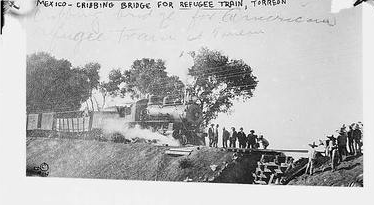
Cribbing Bridges
We built three bridges, taking up the material of each after we passed over to be used for the next bridge.
The train reached Pomona about dark and side-tracked for the night.
During the afternoon we had seen dust in the distance which might indicate the rebels, but we finally decided that the dust was from the animals in the distance. About 3 o’clock at night Mr Wolff came through the train and reported that the rebels were coming and that all the men whose wives were in the Pullman could go into that car. A man came to each car, but quietly asked for the conductor. A tremor of fear ran through the entire train at the news of the rebels, but a sigh of relief quickly followed when their peaceable attitude was marked. They arranged for a conference early the next day between Mr Wolff and General Robles, in charge of the rebel forces at that place. General Robles* told Mr. Wolff that our train would have to return to San Pedro.
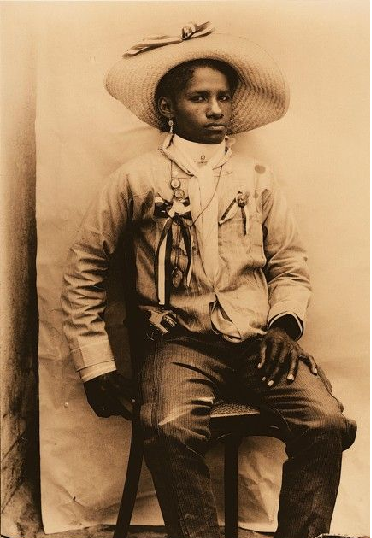
Colonel Carmen Amelia Robles
She gave as her reason for this order that General Carranza was cut off on the main line ahead of the and that General Aubert was also on the main line in front with 1500 soldiers, $2,000,000 in money and 115,500 worth of merchandise for Torreon. If our trains went over the line it might give these men (federals) a chance to reach Torreon before the rebels could take it and thereby save the city from the rebels. She said that when we returned to San Pedro that all the federals would have been
withdrawn from there to Torreon and that Torreon would be attacked that night and within three days the city would be in the rebels hands.
A large company of rebels were seen and some shots fired which hurried the action of the refugees as that we had to return and built and destroyed by is on the preceding day.
The train arrived back at San Pedro Tuesday afternoon to await the action of the rebels. Tuesday night the rebel fores made the attack on Torreon, which was immediately telephoned to us.
This 1914 photo courtesy of the LIFE magazine photo archive on Google shows Mexican General Pancho Villa riding with his men after victory at Torreon
The next morning the grenading? was so heavy that the phone could scarcely be heard. Wednesday night about 9 o’clock the city was taken by the rebel General Villa, and at once taken possession of enemy forces and a loan of $5,000,000 placed on the city.
The refugee train remain in San Pedro from Tuesday till the following Saturday, a city of 20,000 people, with not an office of any description open and not a policeman or officer of the law in the city. All was as quiet as one would wish.
*Colonel Carmen Amelia Robles, an Afro Mexican woman who was a leader in the Mexican Revolution. Legend has it that she participated in many battles and that she would shoot her pistol with her right hand and hold her cigar with her left.
No post today. She is starting her second week of Middle School as a teacher in Roswell. We know she spent the summer in bliss dating this “Carsey” character while taking classes in Mexico City – and we just found out that a man named Bernard has entered her life.
Still to come: Her dream of playing the organ in church is fulfilled – but why is she feeling a bit melancholy?
Here is a look at what else was happening 80-years-ago today.
Police were called upon to end the Costa Rican banana workers’ strike, firing on strike leaders and arresting others
While Elizabeth takes a few days off – here is a look at what happened 101-years-ago this fall when her family had to escape the Mexican Revolution. Go to the Escape from Mexico page for more. This is the first part of the story as told by her father The Rev. JP Lancaster in the Atlanta Constitution March 22, 1914.
(Editors Note- Rev. J.P. Lancaster, now pastor of the Methodist church at Shawmut, Ga. Was until last September preacher and school teacher at Torreon, Mexico. He and his family, with several hundred other people foreign to Mexico, were compelled to flee when the rebels laid siege to the city. This article, written by Rev. Lancaster for The Constitution is a graphic description of the perils and adventures he and his party underwent in getting out of the Mexico territory.)
By Rev. J.P. Lancaster
On August 26, 1913, the state department at Washington sent advises to Consul General Hanns, Consul for the northern division of Mexico, advising all foreigners to leave the country as soon as possible.
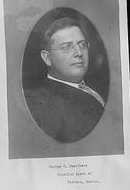
George C. Carothers,Consular Agent at Torreon,Mexico
This message was delivered by Dr. Ryan to Consular Agent G.C. Corothers on September 1. Mr. Corothers then set about to get a train from Torreon to the border.
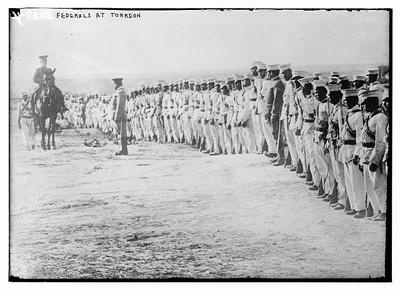
Federals at Torreon
The city was in the hands of the federals, but Gomez Palacio and San Pedro, two cities through which we must pass, were held by the constitutionalists. The federals were not willing for the train to leave till they could regain these places and not risk a train on the territory of the enemy.
Federals at Torreon
September 6 the federals took Gomez Palacio and later the rebels evacuated San Pedro and General Carranea with military and construction trains went over this road to build up the track to Monterrey, the city we hoped to reach.
Dr. Ryan remained in Torreon two weeks and as nothing was accomplished he went by automobile to Monterrey to try to work from the outside. We had had no train and scarcely any mail from the outside for three months and did not know anything of possible dangers to which we might be exposed. To us intervention seemed to be a certainty at an early date and we guessed what the consequences would be to all Americans and their property. Nothing was heard from Dr. Ryan.
Federals at Torreon
John Thompson, a railroad constructional man, was sent out to find what condition the track was and report. Six days passed and he had not returned and no word had come as to what happened to him.
Source of supplies exhausted.
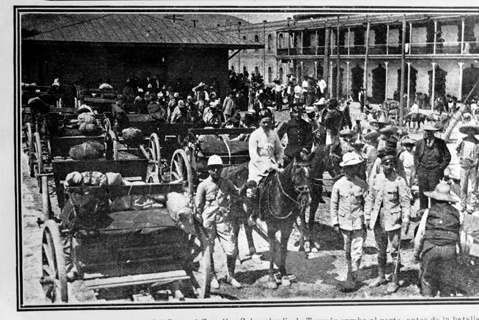
Waiting for the train in Torreon
But for the fact that a great many car loads of food had been laid up in Torreon in transit and this had been confiscated by the general in charge of the the city we would have been in a starving condition long before. This source of supplies was exhausted and food was growing scarce with no hope of opening the railroad to the source of supplies. Meat was 75 cents a pound, lard $2 a pound, potatoes went to 50 cents a pound then gave out entirely; cheese went to $2.40 and ham to $2.
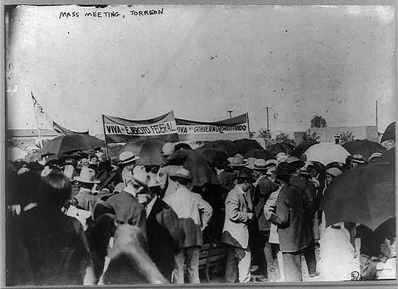
Meeting at Torreon
The banks were out of money. The Laguna bank turned down a check for $500 made by John Brittingham, a multimillionaire who was president of the bank. They said, they could give a check that would be cleared at any bank in the world, but then did not have the money. The Mexican government, in order to pay the soldiers, had demanded that the banks use their reserve gold supply to supply the army. Money was out.
At least three dates had been advertised as the time when the refugee train would leave during the twenty-two days of waiting. The last disappointment had so stirred the Americans that another postponement would have brought serious trouble. The United States government had said twenty-four days before “Get out at once.” and we were still there, being put off by the officials of the federal government.
When all was in readiness to depart the next morning we confronted a new difficulty. While the Americans were in the American bank, Mr Barrett, the bank president, was heard to say “There will be no train tomorrow.” Mr. Corothers was seen in the bank and when asked what the statement meant said that there would be no train unless he could raise $5,000 that night. A dissatisfied depositor, an American, had withdrawn all his money that day and the bank did not have the money to pay for the train. This deficit was met in some way, however, by Mr Corothers and the next day, September 15, the train was ready to carry 350 foreigners to the border.
On Thursday September 21, we left Torreon at 11 o’clock with a train of thirteen cars consisting of two water cars, two cars of wood for the engine, one second-class car for food and cooking, two baggage cars, five first class passenger cars and one Pullman. An American negro was in charge of the engine and Frederick Waitt was appointed by Consular Agent Corothers to have the entire charge of the train as his representative.
We stopped at Gomez Palacio, 3 miles from Torreon, where we took on two more cars, one of which was full of nuns of the Romanist school there, all in uniform. We left Gomez at about 11:30 o’clock and went without delay to San Pedro 50 miles.
Packed and moved – Went to church – Bernard took me home after church.
Here is what else was happening 80-years-ago-today.
And check out the Escape from Mexico page – the refugee train pulls out of San Pedro and a wondrous miracle baby born in the midst of war. Must read!
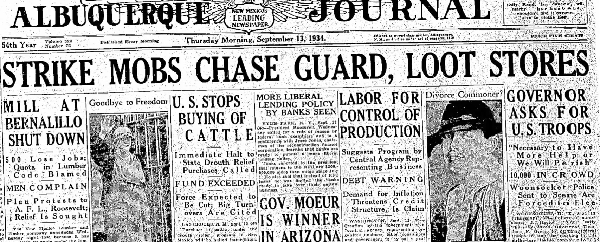
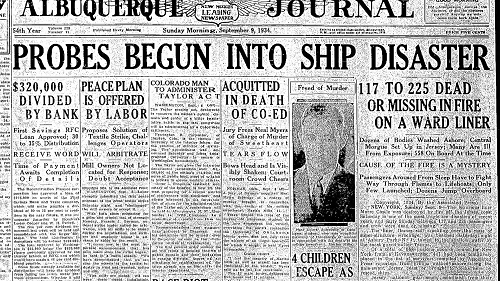
Albuquerque Journal Sept 9, 1934
7,000 police and guardsmen were dispatched to London’s Hyde Park, looking to head off any potential violence on the occasion of a rally by 1,200 members of Oswald Mosley‘s British Union of Fascists. About 8,000 to 9,000 anti-fascists and onlookers also turned out, but the police cordon was so thick that no one on the outside of it could hear the speeches. A total of eighteen arrests were made, mostly for disorderly conduct.
Woke up with a headache that was good! Didn’t even pack , much less move – No letter from home yet – One forwarded from Mahota that was good!
Take a look at what else was happening 80-years-ago today. Also, check out the Escape from Mexico page. The refugees are getting restless and now there is word the rebels may use them as pawns to get America’s attention.
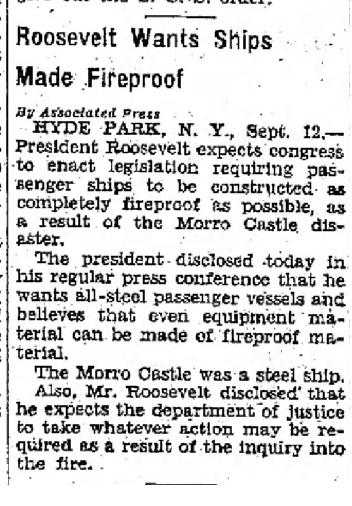
The ocean liner Morro Castle caught on fire off the coast of New Jersey. Only six of the twelve lifeboats were lowered and a total of 137 people died in the disaster.
Gunshots were fired at the home of Austrian Vice-Chancellor Ernst Rüdiger Starhemberg. After a commotion the shots were attributed to a careless guard who bumped his rifle against a wall
Decided to take a room at R.S. Morris’. Lovely room for $11.00 Decided to move tomorrow –
Here is a look at what else was happening 80-years-ago today – and don’t miss what happened 100-years-ago when the Lancaster family had to Escape from Mexico. You’ll never believe what the refugees did after the bridges were burned! Click here to read more.
The world discovers Shirley Temple
Hitler addressed 350,000 party members and spectators at Nuremberg
The San Francisco – Oakland Bay bridge is under construction
No-entry today. She has started her first week of school as a Middle School English teacher in Roswell. Still to come..a new man enters her life in Roswell and who she writes to about her “Heartthrobs.”
Another interesting story I discovered happened 100-years-ago. Click here to read about the Lancaster family’s Escape from Mexico in 1914. Published in the Atlanta Constitution and written by Elizabeth’s father the Rev. JP Lancaster.
Here is a look at what else was happening 80-years-ago today.
Lava erupted from the floor of Halema`uma`u, part of the Kilauea in Hawaii.
Hitler reviewed a parade of 52,000 young labourers on the Nuremberg Rally grounds


 Follow